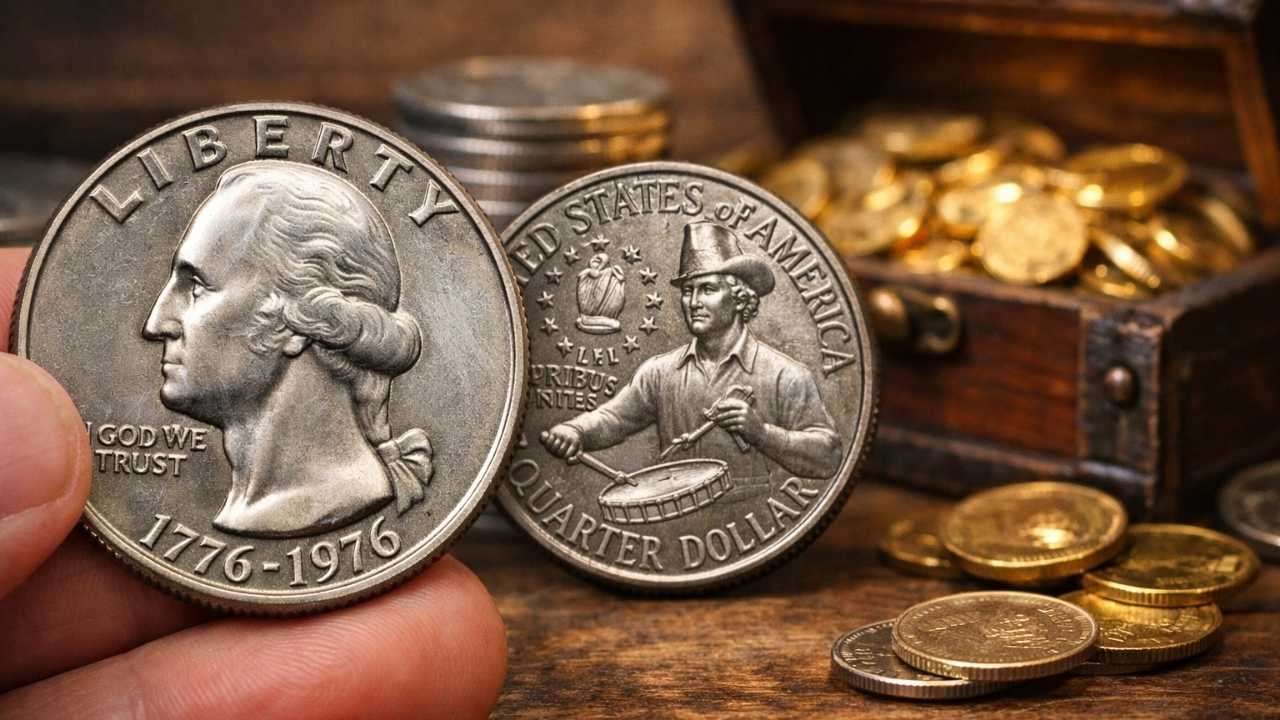
The Bicentennial quarter, released in 1976 to celebrate America’s 200th birthday, is one of the most recognized coins in U.S. history. While most of these quarters are common and worth only face value, certain rare varieties and errors have made some examples worth thousands, even millions. Collectors and everyday people alike have discovered these treasures in pocket change, proving that valuable coins can still be hiding in plain sight. This guide explores the history, design, errors, and values of Bicentennial quarters, helping you identify coins that could be worth a fortune.
History of the Bicentennial Quarter
In 1976, the U.S. Mint issued special designs for the quarter, half dollar, and dollar to commemorate the nation’s 200th anniversary. The Bicentennial quarter features George Washington on the obverse and a colonial drummer with a torch surrounded by thirteen stars on the reverse. These coins were minted in Philadelphia, Denver, and San Francisco, with circulation strikes, proof coins, and silver collector editions.

Design Features
- Obverse: Portrait of George Washington.
- Reverse: Colonial drummer, designed by Jack L. Ahr, with a torch and thirteen stars.
- Mint Marks: P (Philadelphia), D (Denver), S (San Francisco).
- Composition: Copper‑nickel clad for circulation, with 40% silver versions for collectors.
Why Bicentennial Quarters Can Be Valuable
Most Bicentennial quarters are common, but certain factors make some worth big money:
- Silver proof and collector editions.
- Rare minting errors such as double dies or off‑center strikes.
- High‑grade uncirculated coins certified by professional grading services.
- Collector demand for anniversary issues.
Rare Errors and Varieties
Double Die Errors
Some Bicentennial quarters show doubling in the date or lettering. These coins are rare and can be worth hundreds or thousands.
Off‑Center Strikes
Coins struck off‑center are visually striking and highly collectible. Depending on the degree of misalignment, values can range from hundreds to thousands.
Wrong Planchet Strikes
Extremely rare, these occur when a Bicentennial quarter is struck on a blank meant for another denomination, such as a dime or half dollar.

Silver Proof Issues
Special collector sets included 40% silver Bicentennial quarters. High‑grade examples are especially valuable.
Value Chart
| Coin Type | Description | Approximate Value Range |
|---|---|---|
| Circulation Strike | Common issue | $0.25 – $1 |
| Proof Coin | Collector issue | $5 – $50 |
| Silver Proof | Limited edition | $25 – $200 |
| Double Die Error | Doubling in design | $500 – $2,000 |
| Off‑Center Strike | Misaligned design | $1,000 – $3,000 |
| Wrong Planchet | Struck on dime/nickel blank | $5,000 – $25,000+ |
| High‑Grade Silver Proof | Gem quality | $10,000 – $50,000+ |
| Rare Auction Examples | Exceptional rarity | $100,000 – $1,000,000+ |
Collecting Tips
- Check pocket change carefully; rare errors can appear in circulation.
- Purchase proof and silver sets directly from the U.S. Mint or trusted dealers.
- Use magnification to spot doubling or misalignments.
- Store coins in protective holders to preserve condition.
- Consider professional grading to authenticate rare varieties.
Key Highlights
- The Bicentennial quarter was minted in 1976 to celebrate America’s 200th anniversary.
- Most coins are common, but rare errors and silver proofs can be worth thousands.
- Double dies, off‑center strikes, and wrong planchet errors are the most valuable varieties.
- High‑grade silver proof coins have sold for tens of thousands.
- Exceptional rarities have reached values in the millions.
Final Words
The Bicentennial quarter is more than just pocket change; it is a symbol of America’s history and a continuation of numismatic tradition. While most coins remain ordinary, rare varieties and high‑grade examples can be worth staggering amounts. For collectors, this release offers both historical significance and the thrill of discovering hidden treasures. Whether you are a seasoned numismatist or a beginner, the Bicentennial quarter is a coin to watch closely, as it continues to surprise collectors with extraordinary finds worth millions.