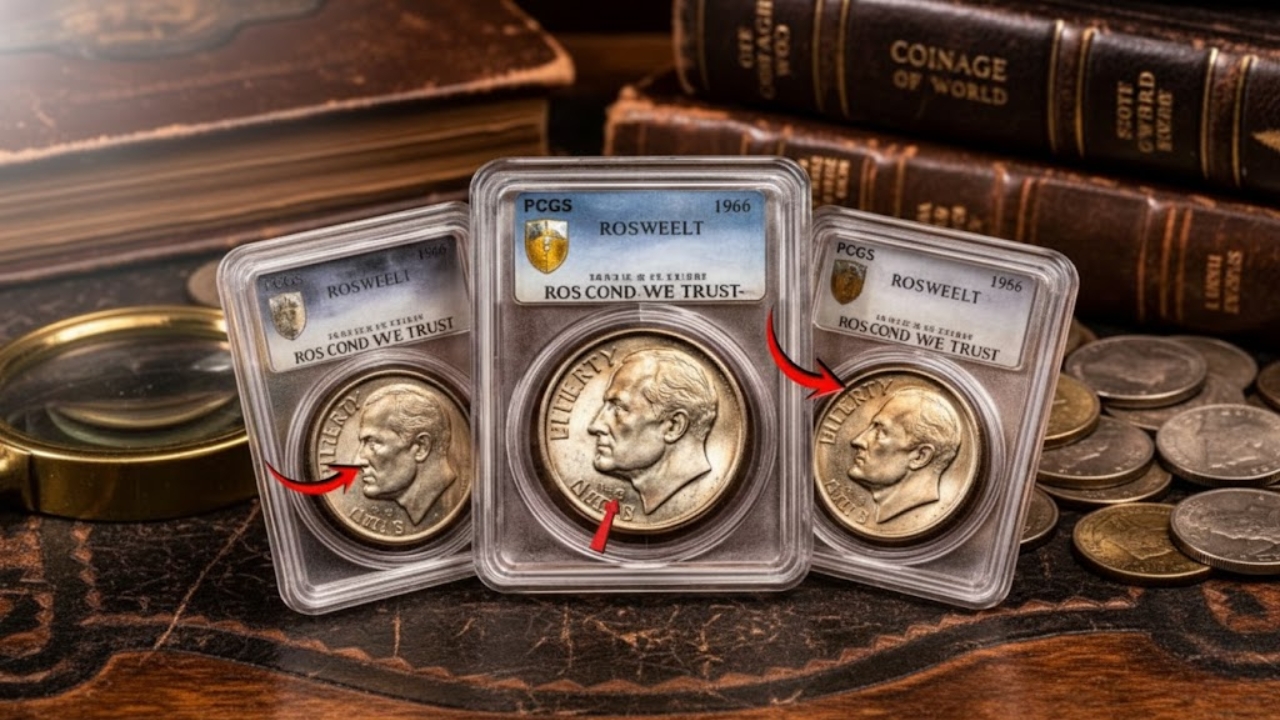
Roosevelt dimes may look ordinary, but some carry extraordinary value. While most are worth only ten cents, a handful of rare varieties and minting mistakes have shocked collectors by selling for thousands of dollars. These hidden treasures can appear in proof sets, old collections, or even everyday pocket change.
Roosevelt Dimes Quick Reference Table
| Feature | Details |
|---|---|
| Most Famous Rarity | 1975 No-S Proof Roosevelt Dime |
| Known Examples | Only 2 confirmed |
| Record Auction Price | $506,250 |
| Silver Composition Years | 1946–1964 (90% silver) |
| Value Drivers | Mint errors, rarity, high grade |
| Popular Error Types | Doubled dies, missing mint marks, RPM varieties |
| Condition Factor | Certified high grades bring premium prices |
Why Certain Roosevelt Dimes Are Worth So Much
The value of rare Roosevelt dimes often comes from minting errors or extremely limited survival numbers. Coins such as the 1975 No-S proof dime are highly prized because they were struck without the expected mint mark, making them exceptionally scarce. Collector demand combined with rarity pushes prices into the thousands.
Condition is equally important. A silver dime in poor shape may only be worth its melt value, but a pristine, professionally graded example can command impressive auction results.

The Legendary 1975 No-S Proof Dime
Among modern U.S. coins, the 1975 No-S proof Roosevelt dime stands out as a true rarity. Only two examples are confirmed, and one sold for over half a million dollars. Struck at the San Francisco Mint but missing the “S” mint mark, this coin’s flawless proof finish and extreme scarcity make it a headline piece in numismatic history.
Silver Roosevelt Dimes (1946–1964)
Dimes minted between 1946 and 1964 contain 90 percent silver, giving them intrinsic value above face. While common circulated examples trade near melt value, high-grade coins with sharp details can sell for thousands. Collectors especially prize certified pieces from certain mints.
Auction Highlights: 1947-D Roosevelt Dime
The 1947-D dime illustrates how condition transforms value. In average grades, it may only be modestly above silver content. Yet in superb certified condition, it has reached auction prices near $7,700, proving that quality can elevate even common dates.

Doubled Die Varieties
Doubled die errors occur when the coin design is impressed more than once in slightly different positions, creating visible doubling on letters or numbers. Strong examples in high grades are highly collectible and can bring significant premiums.
Repunched Mint Marks (RPM)
RPM varieties show overlapping mint marks from multiple strikes. While not all are extremely valuable, rare or high-grade examples attract strong collector interest. Authentication and magnification are essential for proper identification.
Other Missing Mint Mark Proofs
Beyond the famous 1975 No-S dime, other proof coins from the late 1960s and 1970s have surfaced without mint marks. These errors are uncommon and require professional grading to confirm authenticity and market value.

How to Spot a Valuable Roosevelt Dime
Check the year and mint mark first. Dimes from 1946–1964 are silver, while later ones are clad. Look for missing mint marks, doubling, or unusual striking errors. Proof coins have mirror-like surfaces and sharp details. Never clean a coin, as this reduces value. If a dime looks unusual, consider professional grading.
What to Do If You Find One
Handle the coin carefully by its edges and place it in a protective holder. Seek authentication from a trusted grading service. Certified coins sell for higher prices because buyers trust their legitimacy. With patience and proper evaluation, a dime could turn into a remarkable financial discovery.
Final Verdict
Roosevelt dimes may seem ordinary, but rare varieties and mint errors transform them into treasures worth thousands. From silver issues to legendary proof rarities, these coins prove that even pocket change can hold hidden wealth. Careful inspection and professional grading are the keys to unlocking their true value.

Disclaimer
This article provides general numismatic information and should not be taken as financial or investment advice. Coin values fluctuate based on market demand, condition, and rarity. Always consult professional grading services or trusted dealers before buying or selling rare coins.