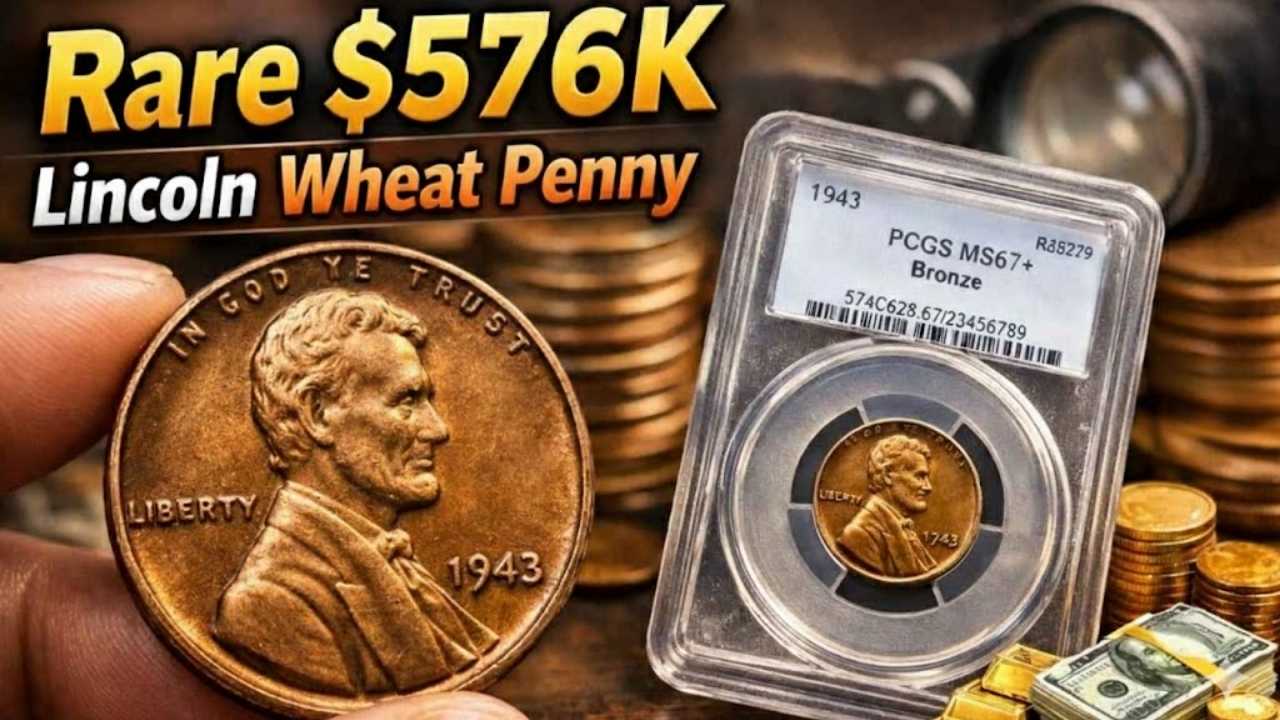
Rare $576K Lincoln Wheat Penny Guide: The story of the legendary $576,000 Lincoln Wheat Penny represents one of the most dramatic chapters in American numismatic history. First introduced in 1909 by the United States Mint, the Lincoln Wheat cent became an instant icon — but certain rare variations have reached astonishing auction records.
For collectors, properly identifying these ultra-rare pennies requires careful inspection of date, mint mark, metal composition, and condition grading. This handbook outlines how to recognize, authenticate, and evaluate high-value Lincoln Wheat cents.
Key Highlights
Understanding what makes a Lincoln Wheat Penny valuable is essential before examining specific coins.
- Produced from 1909 to 1958
- Designed by Victor David Brenner
- First U.S. coin to feature a real historical figure
- Wheat ears reverse design until replaced in 1959
- Most valuable examples involve errors or unique metal compositions
- 1943 copper cents rank among the rarest
Not all Wheat pennies are rare — only specific variants command record-breaking prices.
The Legendary 1943 Copper Lincoln Wheat Penny
During World War II, copper was redirected for wartime production. In 1943, the Mint struck pennies using zinc-coated steel planchets. However, a small number of leftover bronze planchets from 1942 were accidentally struck with 1943 dies.
These rare transitional-error coins are now among the most valuable U.S. coins ever produced.
Identification traits:
- Date must read 1943
- Coin weighs approximately 3.11 grams (copper version)
- Does not stick to a magnet
- Rich brown or reddish tone instead of silvery steel color
In pristine mint condition, a certified 1943 copper Lincoln Wheat Penny has sold for as much as $576,000 at auction.
Other High-Value Wheat Penny Variants
While the 1943 copper cent attracts headlines, other Wheat pennies are highly desirable.
1909-S VDB
- Minted in San Francisco
- Only 484,000 produced
- Features designer initials V.D.B. on reverse
- Highly collectible in higher grades
1914-D
- Minted in Denver
- Low mintage year
- Frequently counterfeited — careful verification required
1922 No D
- Missing mint mark due to die wear
- Authentic examples show weak reverse details
- Popular error variety
Each of these coins can reach several thousand to tens of thousands of dollars depending on grade.

How to Identify a Potential $576K Wheat Penny
Before assuming value, conduct the following checks:
- Inspect the date carefully under magnification
- Check mint mark below the date
- Perform a magnet test for 1943 pennies
- Weigh the coin using a precision scale
- Look for signs of cleaning or damage
Counterfeit 1943 copper cents are common. Some scammers plate steel pennies with copper or alter 1948 dates to appear as 1943.
Always seek professional authentication through recognized third-party grading companies.
Grading and Condition Impact
Coin value depends heavily on condition. Professional grading services such as Professional Coin Grading Service and Numismatic Guaranty Company assign numeric grades based on surface preservation, strike quality, and luster.
General value tiers:
- Good (G-4): Heavy wear, major detail loss
- Extremely Fine (EF-40): Moderate wear, strong features visible
- Mint State (MS-63+): No circulation wear, strong eye appeal
An authenticated 1943 copper cent in Mint State condition commands exponentially higher prices.
Auction Records and Market Demand
Rare Wheat pennies frequently appear at major numismatic auctions, including those conducted by Heritage Auctions.
Market value depends on:
- Authentication certificate
- Population rarity statistics
- Collector demand at time of sale
- Overall economic climate
Only a handful of confirmed 1943 copper cents are known to exist, which drives bidding competition among serious collectors.
Protecting and Preserving Rare Pennies
If you suspect you possess a valuable Wheat penny:

- Do not clean or polish it
- Handle with cotton gloves
- Store in non-PVC holders
- Keep away from humidity
Improper storage can significantly reduce market value.
Final Verdict
The rare $576K Lincoln Wheat Penny stands as one of the most exciting discoveries in American coin collecting. While millions of Wheat cents were produced, only a tiny fraction carry extraordinary value.
Careful identification, proper authentication, and professional grading are critical before assigning any major price estimate. For collectors willing to examine their coins closely, the possibility — however small — of uncovering a historic rarity continues to fuel fascination with the Lincoln Wheat series.