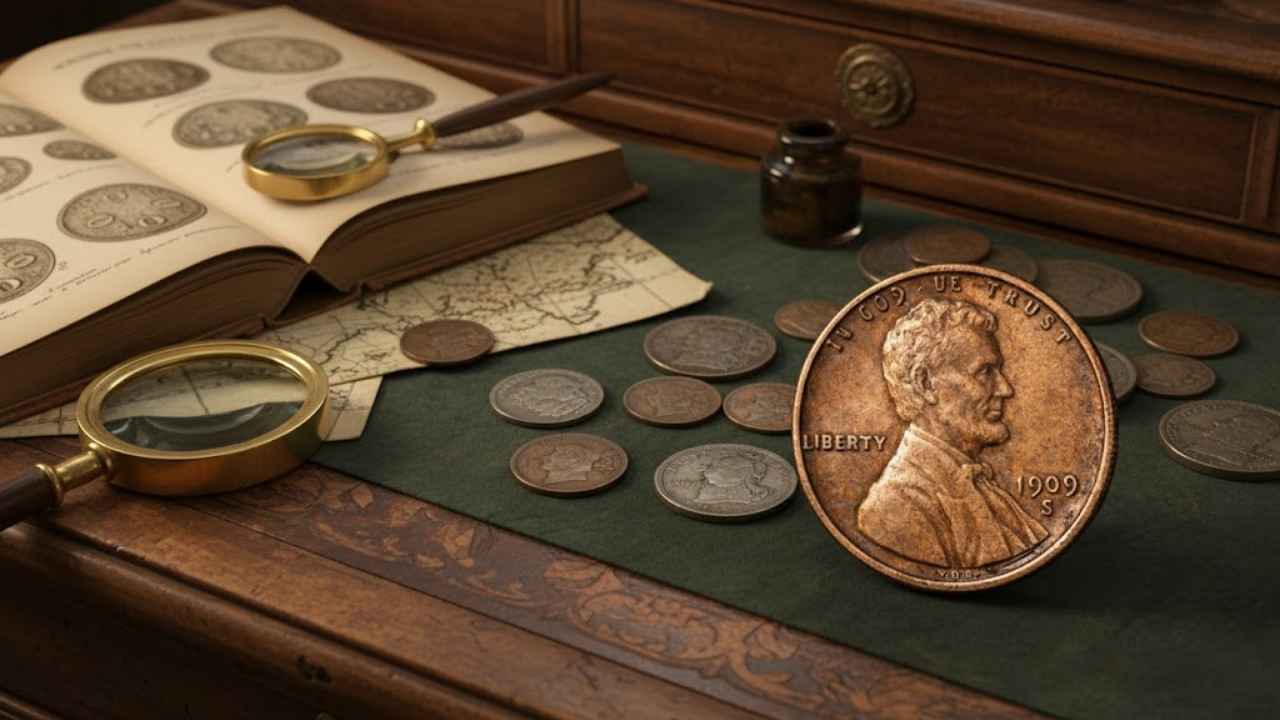
Before diving into the history, it helps to understand how condition impacts the value of this rare coin. Collectors rely on grading scales to determine worth, and the 1909‑S VDB penny is no exception.
| Grade | Description | Approximate Value |
|---|---|---|
| Good (G‑4) | Heavily worn but identifiable | $700–$1,000 |
| Fine (F‑12) | Moderate wear, details visible | $1,200–$2,000 |
| Extremely Fine (EF‑40) | Light wear, sharp details | $3,000–$5,000 |
| About Uncirculated (AU‑50) | Slight wear, strong luster | $7,000–$10,000 |
| Mint State (MS‑65) | No wear, brilliant strike | $20,000–$50,000+ |
The Birth of the Lincoln Penny
The Lincoln cent was first introduced in 1909 to honor the 100th anniversary of Abraham Lincoln’s birth. It was groundbreaking because it was the first circulating U.S. coin to feature a real person rather than an allegorical figure. Victor David Brenner designed the coin, and his initials VDB appeared prominently on the reverse at the base of the wheat stalks.
The Controversy Over the Initials
Soon after release, critics claimed Brenner’s initials were too large and distracting. The Mint responded quickly, ordering their removal. This decision created two varieties: coins with VDB and those without. The San Francisco Mint produced only a limited run of pennies with the initials before the change, giving birth to the rare 1909‑S VDB Lincoln Penny.
Why the Coin Is So Rare
Only 484,000 examples were struck at the San Francisco Mint with the initials intact. Compared to the millions minted in Philadelphia, this tiny production run makes the coin one of the most coveted pieces in American numismatics. Its scarcity continues to drive demand more than a century later.
Market Value and Demand
Circulated examples of the 1909‑S VDB penny can sell for hundreds or thousands of dollars, while pristine uncirculated specimens have reached tens of thousands at auction. Sensational headlines have speculated about values in the hundreds of millions, underscoring the cultural fascination with this coin. The true market value depends on condition, provenance, and collector demand.
Coin Grading and Authentication
Professional grading services play a crucial role in determining value. Coins are evaluated for wear, strike quality, luster, and overall eye appeal using the Sheldon scale, which ranges from Poor (P‑1) to Perfect Mint State (MS‑70). Authentication is equally important, as counterfeits exist. Genuine coins feature the “S” mintmark below the date and the initials VDB on the reverse.

Stories of Discovery
Collectors often share tales of unexpected finds, from estate sales to forgotten coin jars. While the odds of stumbling upon a 1909‑S VDB penny in circulation today are slim, the possibility fuels the excitement of searching. These stories highlight the enduring allure of treasure hunting in everyday life.
Cultural Significance
Beyond its monetary value, the 1909‑S VDB penny represents a turning point in American coinage. It marked the beginning of modern portrait coins and reflected the tension between artistic recognition and public perception. Brenner’s initials, once controversial, are now accepted and appear discreetly on modern coins.
Investment Potential
Rare coins like the 1909‑S VDB penny are often viewed as alternative investments. Their value tends to appreciate over time, especially for coins in exceptional condition. However, the market can be unpredictable, and collectors are encouraged to pursue coins for passion as much as profit. Owning a piece of history often outweighs financial considerations.
Comparisons With Other Rare Coins
The 1909‑S VDB penny is frequently compared to legendary rarities such as the 1913 Liberty Head Nickel and the 1804 Silver Dollar. While those coins were struck in minuscule numbers, the Lincoln cent was a regular issue, making its survival in pristine condition particularly remarkable.
The Legacy of Victor David Brenner
Brenner’s design has endured for more than a century, with Lincoln’s portrait still gracing the penny today. His initials, once the subject of controversy, are now recognized as a lasting contribution to American coinage. The 1909‑S VDB penny remains a testament to his artistry and influence.
Final Verdict
The 1909‑S VDB Lincoln Penny is more than a coin; it is a cultural icon, a symbol of rarity, and a piece of history that continues to inspire collectors and treasure hunters. Whether valued at thousands or imagined at hundreds of millions, its true worth lies in the stories it tells and the dreams it sparks. For those who cherish numismatics, the possibility that such a coin could be hiding in a change jar keeps the legend alive.
Disclaimer
Values mentioned are approximate and subject to change based on market conditions, coin grading, and collector demand. This article is for informational purposes only and should not be taken as financial or investment advice.