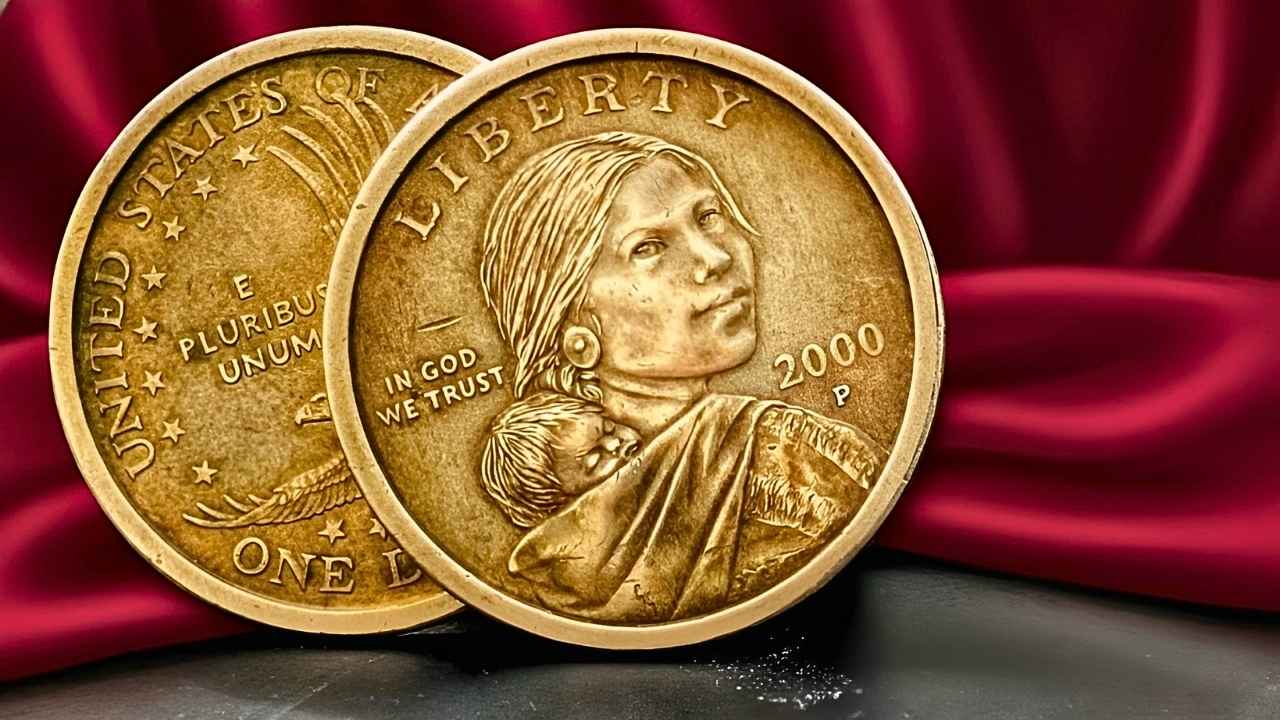
The Sacagawea Dollar, first released in 2000, was designed to honor Sacagawea, the Shoshone woman who guided the Lewis and Clark expedition. While most of these coins circulate at face value, certain rare varieties and minting errors have become legendary among collectors. In 2026, some 2000-P Sacagawea Dollars are worth thousands, and a few rare examples can even reach values in the millions. This guide explores the most valuable varieties and why they remain so highly prized.
Origins of the Sacagawea Dollar
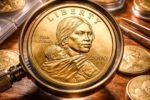
The coin was introduced to replace the Susan B. Anthony Dollar and to encourage the use of dollar coins in everyday transactions. Glenna Goodacre designed the obverse, featuring Sacagawea carrying her infant son, Jean Baptiste. The reverse, created by Thomas D. Rogers, depicts a soaring eagle surrounded by 17 stars. Its golden color, achieved through a manganese‑brass alloy, gave it a distinctive appearance compared to earlier dollar coins.
Composition and Design
- Composition: Copper core clad with manganese brass (77% copper, 12% zinc, 7% manganese, 4% nickel)
- Weight: 8.1 grams
- Diameter: 26.5 mm
- Obverse: Sacagawea with her infant son
- Reverse: Soaring eagle with 17 stars
- Mint marks: Philadelphia (P), Denver (D), San Francisco (S)
Chart of Rare 2000-P Sacagawea Dollar Values
| Variety | Notable Feature | Estimated Value (2026) |
|---|---|---|
| 2000-P Cheerios Dollar | Prototype reverse with detailed tail feathers | $5,000–$25,000 |
| 2000-P Mule Error | Sacagawea obverse paired with Washington Quarter reverse | $50,000–$200,000+ |
| 2000-P Goodacre Presentation | Special strike presentation coins | $200–$1,000 |
| 2000-P Off‑Center Strike | Misaligned design error | $100–$1,500 |
| 2000-P Proof Error | Struck on wrong planchet | $1,000–$10,000 |
The Cheerios Dollar
In 2000, General Mills included Sacagawea Dollars in Cheerios cereal boxes as part of a promotional campaign. Some of these coins featured a prototype reverse with enhanced eagle tail feathers. Today, these Cheerios Dollars are highly sought after, with values reaching tens of thousands of dollars.
The Mule Error
The mule error is one of the most extraordinary mistakes in U.S. coinage history. A Sacagawea Dollar obverse was mistakenly paired with a Washington Quarter reverse, creating a coin with mismatched designs. These coins are extremely rare and can sell for tens of thousands, sometimes even hundreds of thousands of dollars at auction.
The Goodacre Presentation Coins
Artist Glenna Goodacre, who designed the Sacagawea Dollar, was paid with 5,000 specially struck coins. These presentation coins have a distinctive finish and are highly collectible. In 2026, they continue to attract strong demand, with values ranging from a few hundred to over a thousand dollars depending on condition.
Other Error Varieties
Beyond the famous Cheerios and mule errors, collectors also seek out off‑center strikes, proof errors, and coins struck on wrong planchets. These mistakes add uniqueness and rarity, making them valuable additions to any collection.
Market Trends in 2026
The Sacagawea Dollar market remains strong in 2026, with collectors drawn to rare varieties and error coins. Auction houses report record prices for mule errors and Cheerios Dollars, while Goodacre Presentation coins continue to attract steady demand. Online platforms have expanded access to trading, and certified coins in high grades remain highly sought after.
Collecting Tips for Enthusiasts
- Learn to recognize rare varieties such as mule errors and Cheerios Dollars
- Preserve coins in protective holders to prevent wear
- Verify authenticity through professional grading services
- Focus on condition, as higher grades significantly increase value
- Stay informed about auction results and market trends
Historical Significance
The Sacagawea Dollar is more than just currency; it is a tribute to a woman whose contributions were vital to American history. Its enduring design and rare varieties remind us that even modern coins can become extraordinary treasures. Collectors value not only the coin’s metal but also the story it tells about America’s heritage and innovation in coinage.
Key Highlights
- The Sacagawea Dollar was introduced in 2000 to replace the Susan B. Anthony Dollar
- Rare varieties include the Cheerios Dollar, mule error, and Goodacre Presentation coins
- Error varieties can be worth hundreds or even thousands of dollars
- In 2026, collector demand remains strong, with auctions setting record prices
- The coin symbolizes history, artistry, and investment potential
Final Words
The 2000-P Sacagawea Dollar stands as one of America’s most intriguing modern coins, cherished for its design, history, and symbolism. In 2026, collectors have the opportunity to explore a wide range of issues, from affordable circulation strikes to rare and valuable treasures worth millions. Whether building a complete set or searching for a single standout piece, the Sacagawea Dollar offers a journey through history and a chance to hold one of the greatest numismatic treasures of modern times.